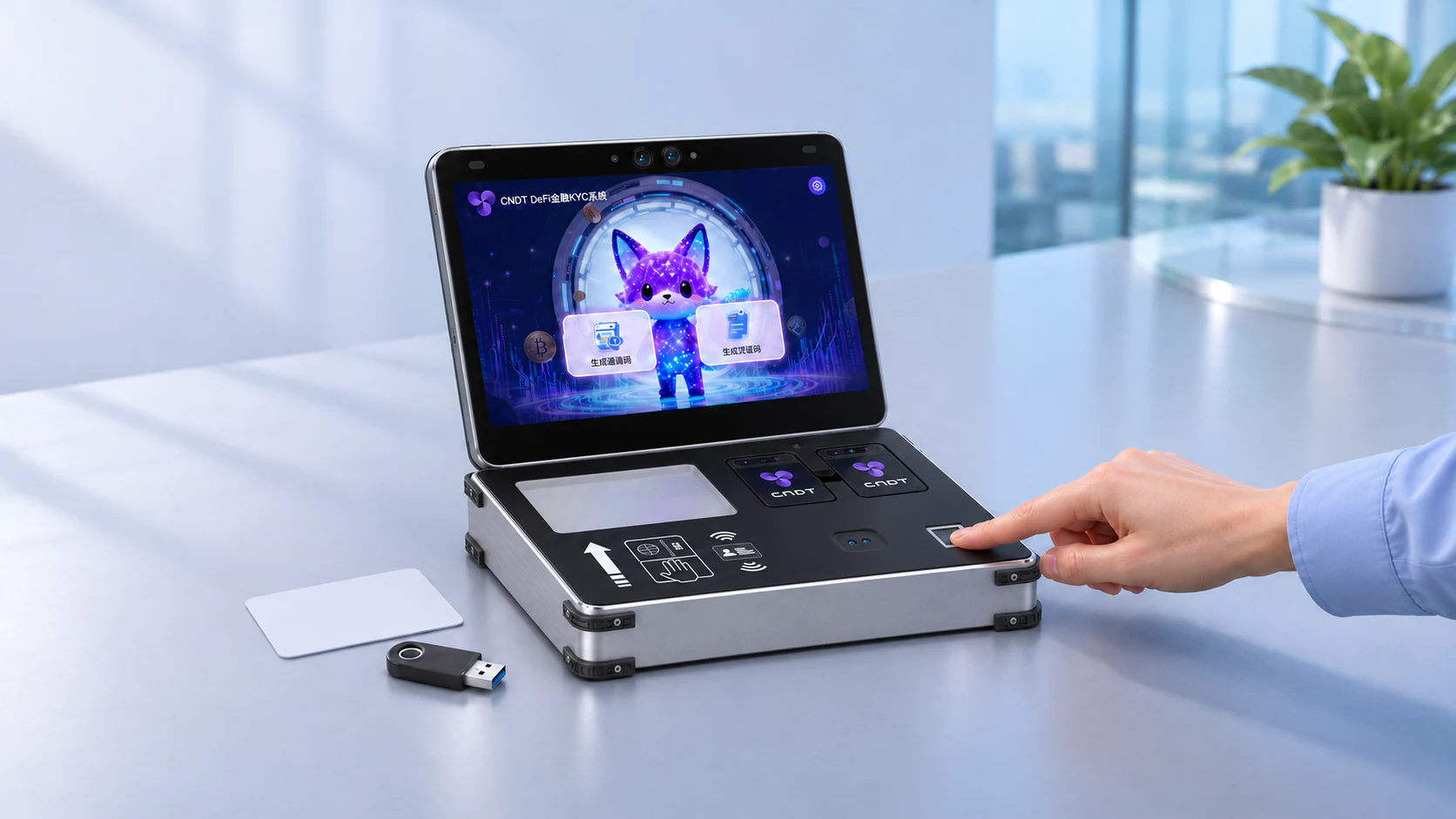
Identity is the first gate in digital business. If it is not secured, authorization, data and assets rest on uncertain ground. A single identification method is no longer enough: different applications, security levels and user groups require different approaches.
TradeSwift combines six recognition capabilities for trusted identity verification.
Six capabilities in one terminal
- Binocular iris: 1920×600@30fps, 810nm wavelength, for high-security applications
- Face: 2MP CMOS with HDR adaptation for backlit conditions
- Semiconductor fingerprint: 508dpi, supporting 1:1 and 1:N matching
- Palmprint/palm vein: integrated recognition at 5–20cm, contactless and difficult to forge
- Electronic ID reading: 13.56MHz contactless radio frequency
- UKey: hardware-level identity credentials
These capabilities are selected for the application rather than combined indiscriminately. Digital banks use them to verify identities for remote account opening, public agencies use them in compliance terminals, and DeFi platforms use them for online identity checks: one foundation with different recognition strategies.
Closing the loop from recognition to authorization
Verification is a means to a business outcome. After the terminal confirms identity, the business system grants the appropriate service permissions. Account opening, signing and enquiries each connect to a verified identity. This completes the chain from trusted identity to business authorization: identification first, authorization second.
Hardware-level security as a foundation
Identity data remains on the device rather than being stored as cloud plaintext. UKey hardware credentials and Chinese cryptographic algorithms keep capture and matching within controlled hardware. For financial and public-sector customers, this is a basic requirement.
